
The 2026 GPU Market Shake‑Up: What AMD, NVIDIA & Intel Are Changing This Year
The Quick Takeawy
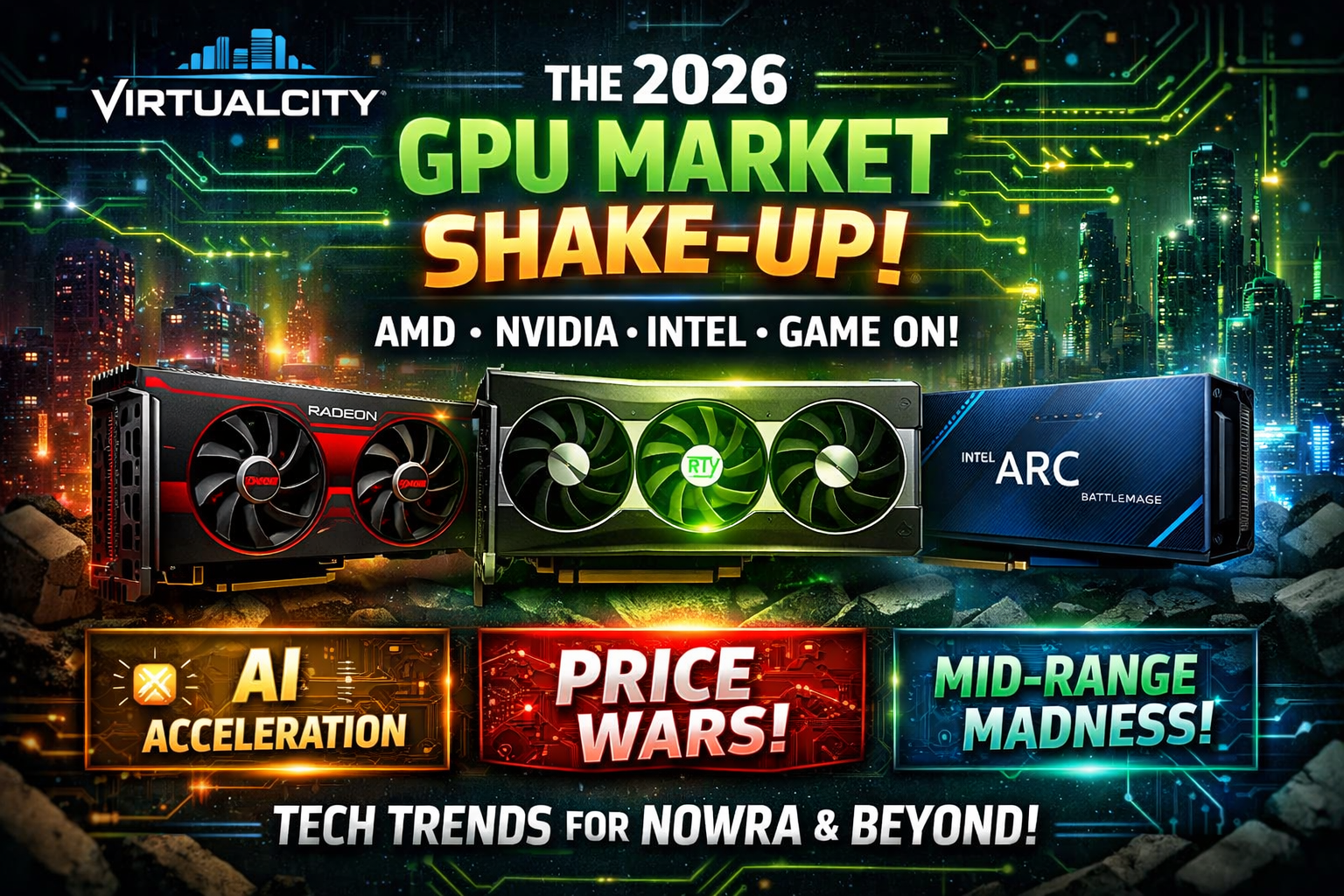
2026 is the first year in a long time where all three GPU giants—AMD, NVIDIA, and Intel—are disrupting the market at the same time. Prices are shifting, architectures are evolving, and AI‑centric features are no longer “nice to have”—they’re the battleground.
If you’re hardware‑curious, building a PC, or just love watching the silicon chess match unfold, this year is a big one.
NVIDIA: Double Down on AI, Efficiency & "Super" Refreshes
NVIDIA’s 2026 strategy is clear:
AI is the product. Gaming is the bonus.
Key Moves This Year
- "Super" refreshes across the 50-series
Expect higher clocks, better memory bandwidth, and more aggressive pricing to counter AMD’s momentum. - AI‑accelerated everything
NVIDIA is pushing new Tensor‑driven features for creators, streamers, and productivity users—not just gamers. - DLSS 4 refinements
Improved frame generation, better latency handling, and smarter upscaling for older titles.
What It Means for You
NVIDIA wants to stay the premium choice, but they’re also feeling pressure.
2026 is the first time in years where they’re not the automatic recommendation for every budget.
AMD: Zen-Era Confidence & RDNA 4 Price Disruption
AMD enters 2026 with swagger. After strong CPU wins and a surprisingly competitive GPU lineup in 2025, they’re pushing harder.
What’s New
- RDNA 4 mid‑range dominance
AMD is targeting the sweet spot: 1080p and 1440p gamers who want value without compromise. - FSR 4 improvements
Better temporal stability, cleaner edges, and more consistent frame generation. - Lower BOM (bill of materials) = lower prices
AMD is aggressively undercutting NVIDIA in the $400–$900 AUD range.
Why It Matters
If you’re building a gaming PC in 2026, AMD is the brand forcing everyone else to rethink pricing. They’re not trying to win the halo crown—they’re trying to win the market.
Intel: Battlemage Grows Up
Intel’s third year in the GPU arena is the most important yet. Battlemage wasn’t perfect, but it proved Intel is serious.
2026 Highlights
- Celestial architecture lands late 2026
Promising better ray tracing, more stable drivers, and improved AI acceleration. - Driver maturity finally catching up
Intel’s biggest weakness is becoming a strength—frequent updates, better game support, fewer weird bugs. - Budget GPU disruption
Intel is targeting the $200–$400 AUD segment where NVIDIA barely competes and AMD dominates.
The Big Question
Can Intel become the “default budget GPU” the way Ryzen became the default budget CPU? 2026 will tell.
The Real Battle: AI Acceleration & Frame Generation
This year isn’t just about raw raster performance. The new battlegrounds are:
-
AI upscaling quality
-
Frame generation latency
-
Driver‑level AI tools for creators
-
On‑GPU AI compute for local LLMs
NVIDIA still leads, but AMD and Intel are catching up faster than expected.
Pricing Trends in 2026 (Australia‑Friendly Insights)
Here’s what we’re seeing across the industry:
- High‑end GPUs are stabilising
$2,000+ cards aren’t climbing higher (thankfully). - Mid‑range is where the action is
AMD and Intel are pushing prices down; NVIDIA is reacting. - Entry‑level GPUs are finally worth buying again
Intel’s pressure is forcing competition.
For Nowra and Shoalhaven GPU market, this is the best mid‑range GPU market we’ve had in years.
What This Means for GPU Market so far in 2026
If you’re planning a new purchase:
For Gaming
- 1440p: AMD is the value king
- 4K: NVIDIA still rules
- 1080p: Intel is becoming shockingly viable
For Creators
- NVIDIA’s AI tools still give them the edge
- AMD is improving fast
- Intel is the wildcard
For Everyday Users
- Integrated graphics are getting better
- Entry‑level GPUs are no longer a rip‑off
- AI‑accelerated features are becoming standard
Final Thoughts
2026 is the most exciting GPU year since the original RTX launch. All three companies are innovating, competing, and—most importantly—giving consumers real choice again.
Whether you’re gaming, creating, or just love tinkering with hardware, this is a brilliant year to be paying attention.